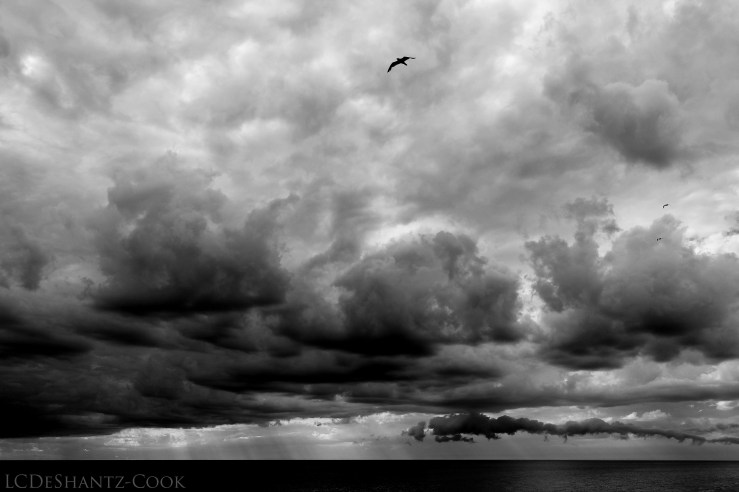
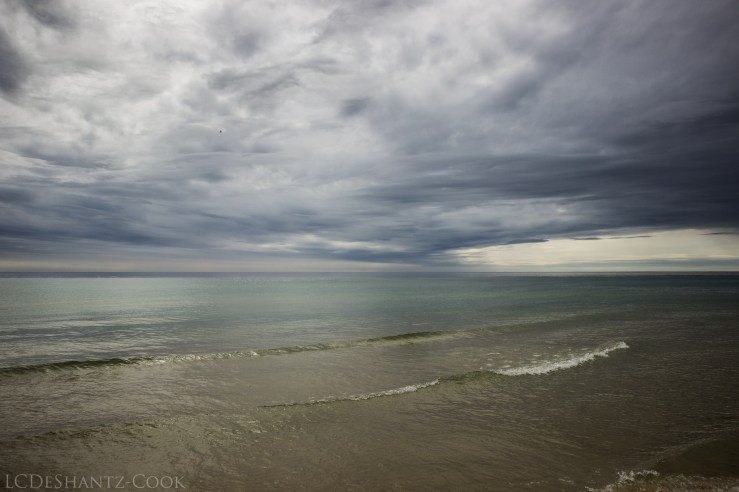
How do you pick a side?*

It’s pouring here, has been since early this morning.

I’m restless, too busy–my brain won’t quiet. I barely finish a thought when the next one comes barging in, shoving the one before it into the swamp-marsh of things in my head that bubble and are forgotten.

I have a lot of questions rumbling around in my head. I often wonder if it’s too many questions, but this is the way my brain works and who am I to argue that? And if you know me personally, you might know that I ask a lot of questions. I want to know how people work.

And the question that woke me up at 3 a.m., before the rain started, when the dog had 90 percent of my bed space and the world was so quiet outside that I was nearly convinced that me and the dog and the cottage were the only existing things on earth, was this:

What side of the bed do you sleep on? And why?

deshantzcook_20160621_43130029

Which then led to these questions:

  • Do you change the side of the bed you sleep on when you sleep somewhere else, or when you move?
  • Is your choice dependent upon bed placement, or size or shape of room?
  • What about geographical placement (like, do you need be on the northernmost side of the bed)?
  • Do you let other people (or pets) influence your side-of-bed choice?
  • Is your choice influenced by needing to be close to or farther away from a door or window?
  • Do you not even choose a side, but sleep in the middle (understandable for a twin bed, but anything bigger and middle sleeping just seems unfathomable to me)?
  • Is it weird that I am even pondering these questions?
  • I mean, why do I need to know how other people sleep?
  • Should there even be hyphens in the phrase “side-of-bed choice”?
  • Wait, do I really want to be questioning hyphen use in the middle of the night?

And so it went for a good half hour longer, pondering beds and sides and pillows (fat and thick? or flat and thin?) and the ultimate question of why dogs in beds, even tiny dogs, seem to expand to take up so much more space than it seems they should.

Maybe that’s a question for another sleepless middle of the night. Dog expansion.

*Oh. You thought I was going to write about the election? Sorry to disappoint.
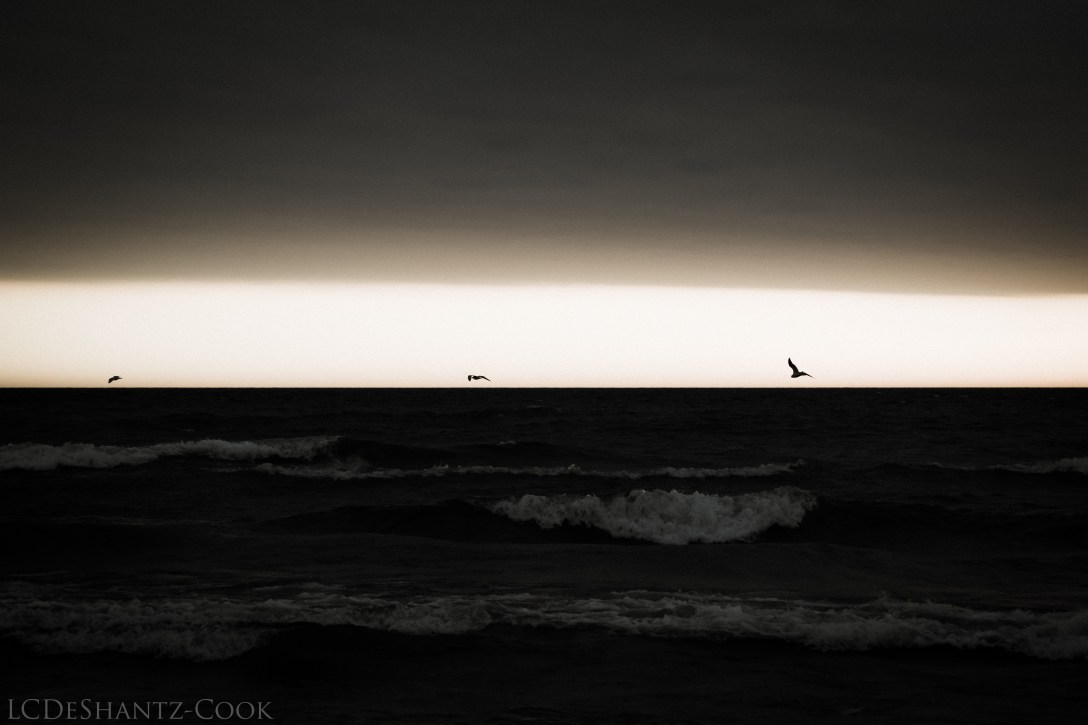
Coming to Terms with the Dead

deshantzcook_20161017_img_2477

I nearly step on its body,
the small bird that the wave pushes rolling and tumbling ungracefully
as a watery offering toward my feet on the shore.

I see more as I walk, first five in close proximity
and then six, seven, nine, twelve dead birds in open shore-graves
until I can count no more and turn back to the cottage, weeping.

I recognize them as the swallows that nest in holes dug into the sandy cliffs
that form too close to the water, cliffs which were battered by yesterday’s storms
and the wild waves and wind that erode the shoreline.

I wonder if these dead are mourned—if the birds I see now
darting along the beach as I walk home are searching, frantic,
for the holes they built not long ago to nest their young?

My footprints disappear as quickly as I leave them,
the depressions in the sand fill instantly and without fanfare;
a reminder of my own impermanence and the lake’s dispassion.

There is no rescuing to be done;
I can pluck a struggling moth or two from death for today, and dry my tears.
The lake carries on.

deshantzcook_20161017_img_2488

deshantzcook_20161017_img_2505

A good summer

Summer, you’ve been good. I mean, seriously, full of good stuff. I ate all the cherries I possibly could, fresh-picked. Summer squash and zucchini? I’ve eaten tons. Hot, languorous days and steamy nights galore. Beach walks and sunsets–oh yes, yes, yes (although never enough). Friends visiting, time with my kids, good news, a really good cake recipe, cooking for new friends, old cars that are still running.

All very good things.

But there are rumors you’re moving on, summer. The sky is starting to say so, and a leaf or two is nodding in agreement. The corn and blueberries and peaches won’t be around too much longer, either (I’m freezing some, so I can pay homage to you when the winter chill arrives).

deshantzcook_20160827_IMG_0182
a very fall-like leaf in the road
deshantzcook_20160827_IMG_0153
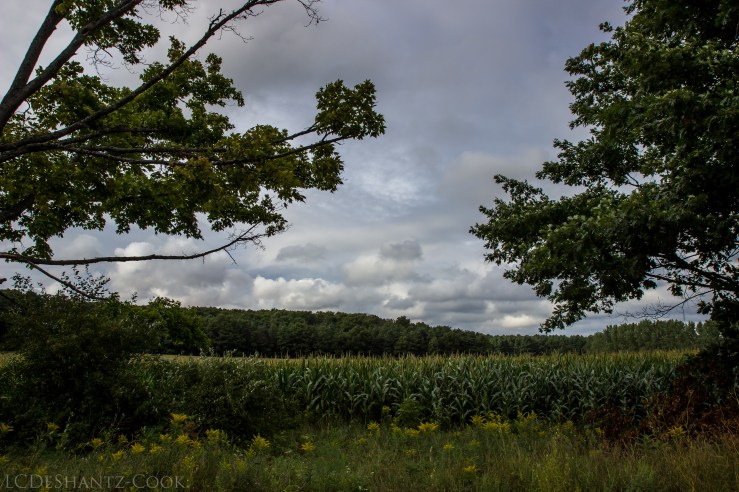
corn field, goldenrod, sky
deshantzcook_20160827_IMG_0143
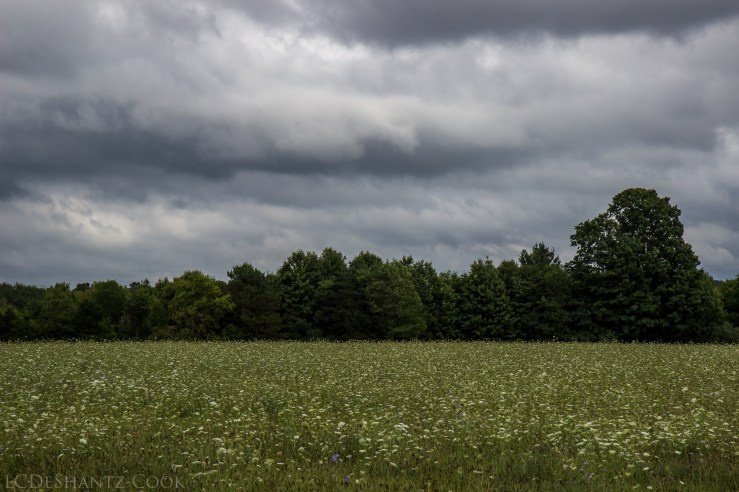
a field of queen Anne’s lace

I love fall, though. I love scarves, sweaters, and rugged boots. Fall colors and threatening-looking skies, too, and bundled-up beach walks. It’s beautiful all the same. But I think there might be still a few weeks left for night swims, fresh peaches, tomatoes from the stand up the road.

deshantzcook_20160827_IMG_0165
old shed, diamond window
deshantzcook_20160825_IMG_0136
dune grass, gone to seed, Lake Michigan

I’m not counting summer out just yet. But I’ll welcome fall in all its colorful glory, when it decides to arrive.

Jumping in

In my very, very early 20’s while studying journalism I got an internship doing something I had no idea how to do. The job was for a crusty old lawyer who had his own firm and a corner office in Chicago’s financial district. He wanted someone to help him self-publish a book of short stories as well as proofread, typeset, and print a collection of children’s short stories.

I sat in that windowed, corner office in front of him and his big desk as he told me what he wanted done and asked me if I could do it. I said I could. I said I’ll figure out how, and I’ll get it done. I know my heart was pounding and my bottom lip was probably quivering because I honestly had no idea how I would do these things, but I said it with enough conviction to convince him to hire me. And thus I spent the year learning about how to get an ISBN and work with writers and printers and how to set type on late 1980s computers and now-obsolete word processing software. Often getting yelled at, too, as I found my boss was exacting and had little patience for mistakes.

There was no internet to learn how to sort these things out, so I called people I thought might know–professors at universities, librarians, people at the newspapers, bookstores; most of them very happy to impart their knowledge (I think my youth and inexperience was a benefit, here). When I had to call some very prominent writers to ask for cover quotes, I got chewed out–royally–by an author who felt snubbed that he hadn’t been included in the book. I may have cried for an entire day over that, but I had a story to tell, and I still got quotes from some other authors.

Sure, the entire thing scared me, but I did what I said I’d do–I figured it out; I got it done. I got tougher in the process, that’s for sure.

I’ve done other things since then that required the weird mixture of blind bravado, hope, and maybe a shred of skill. But the older I get the more I have settled into the things I know, without fail, that I can do. The easy things. The things that don’t require lip-quivering and hesitation and panic.

A few weeks ago I got asked to do something I don’t know how to do, and I immediately thought of that internship. I said yes. I said I’d figure it out, and I’d get it done.

So that’s what I’m going to do.


(Edited to add that I think only fondly of my former boss, Mr. Morton, now. He was tough on me, but I know that he both cared about and appreciated me back then, and I learned invaluable lessons from him.)


A good crowd

I write a little poetry sometimes. Not because I want to, or because I know how to, but just because things bubble into my head and come out of me in a certain way, and I call it a poem, even if it might not be, because that’s just what feels right and well, let the poetry police come and argue otherwise.

I’ve never published any of it, nor have I ever read my own stuff aloud to anyone (unless you count my dog, who has been a patient, if not interested, listener). Just over a week ago I stood in front of a lively and supportive audience of some friends and some strangers who were just liquored up enough to seem somewhat less daunting (to me, anyway), and I put my lips up to a microphone and without apology or explanation read, aloud, comfortably even, two poems I wrote.

And it felt kind of awesome.

And I kind of want to do it again.


The Piano

In the thick of things it came,
was wheeled up onto the porch on an old, battered ramp
dragged into the living room where it stood
no worse for the wear or the years
waiting, like an old and somewhat awkward guest,
to be told its place

A fragment of my mother’s life, this piano
the one she played in her youth
rich, deep chestnut, years etched in those wooden waves
red stains, streaks on white keys
from her clicking nails, you could hear them
through her South Pacific and Schubert’s Serenade

She disappeared into those songs
and others
in her place fingers,
keys, clicks, voice, movement
I could never look away
when she played

But she is gone
the piano now a reminder
in a too-small house, crowded dining room,
where a cat makes middle of the night attempts at Mendelssohn
and where children offer serious concerts
during dinner and phone calls

where it waits still, ever patiently, for its player


A Love Letter to Manhattan

Oh, Manhattan
you are captivating!
At once both old and new
enveloping, yet aloof

I dreamed of you long before we met
of your towering buildings poking holes in the clouds
your grit, your attitude, your people
you felt like home and I fell hard

You remained perennially beyond my grasp
save for the brief moments I pretend that we are a couple
howling at a crazy moon together
from a drunken rooftop

Better to leave you in my dreams, though
like a pined-for lover
skip the fumbling, awkwardness
and the eventual demise

I’ll visit
we’ll flirt
you’ll stay shiny and elusive
and I, still captivated


The “no” conundrum

Like a lot of women I know, I am a yes-woman, a rescuer, a helper. I say yes when I can’t possibly even do the thing I’m saying yes to because I’m already overbooked with all the other things I said yes to. I say it in my head, “no, no, no” but the other word forms on my tongue and before I know it, yes just slips out of my mouth before I can grab it back.

I was shopping last week for a work trip, looking at some dresses that I thought would be cool and comfortable for steamy California, when I started a conversation with a woman nearby (I do this often, and I like this about me). We quickly got to the fact that we were the same age, that we were looking for cute summer dresses, and the conversation flowed so easily that I somehow got to telling her how, at 49, I have trouble saying no to people.

Well. She wasn’t having any of that, and gave me a lesson in self-preservation that brought tears to my eyes. There needs to be nothing beyond the no, she said. No “no, I can’t do that for you because…” or “I’d love to help you, but… .” Just plain old no will do just fine.

I heard her.

I admire this kind of strength and honesty. What do we gain by putting ourselves aside to do for others at the expense of our own needs? Exhaustion, that’s what. Burnout. A heaviness that becomes oppressive and crushes our spirits. A silencing of our own voice.

Maybe this is the conundrum of the middle-aged woman? Dealing with work, adult kids, aging parents, growing commitments at a time in our lives where we thought we’d have less on our plates. We can’t just shirk our duties, quit our jobs to go live on organic farms, trip through the rest of our lives doing only what we want to do. But maybe no can become part of our vocabulary again, like it probably was when we were younger.

Of course I don’t want to stop doing things for those I love, but I’m going to be 50 in a few short months, and I hope to get more honest with myself and say no when no is truly what I mean to say. If this means pausing to gather my nerve, I will do that. I’ll remember this gorgeous woman, whose name I have already forgotten (I’m bad at names, I don’t like this about me), steel myself, and say no.

Just no.

Turbines

deshantzcook_20160711_IMG_9427
sun-slicer

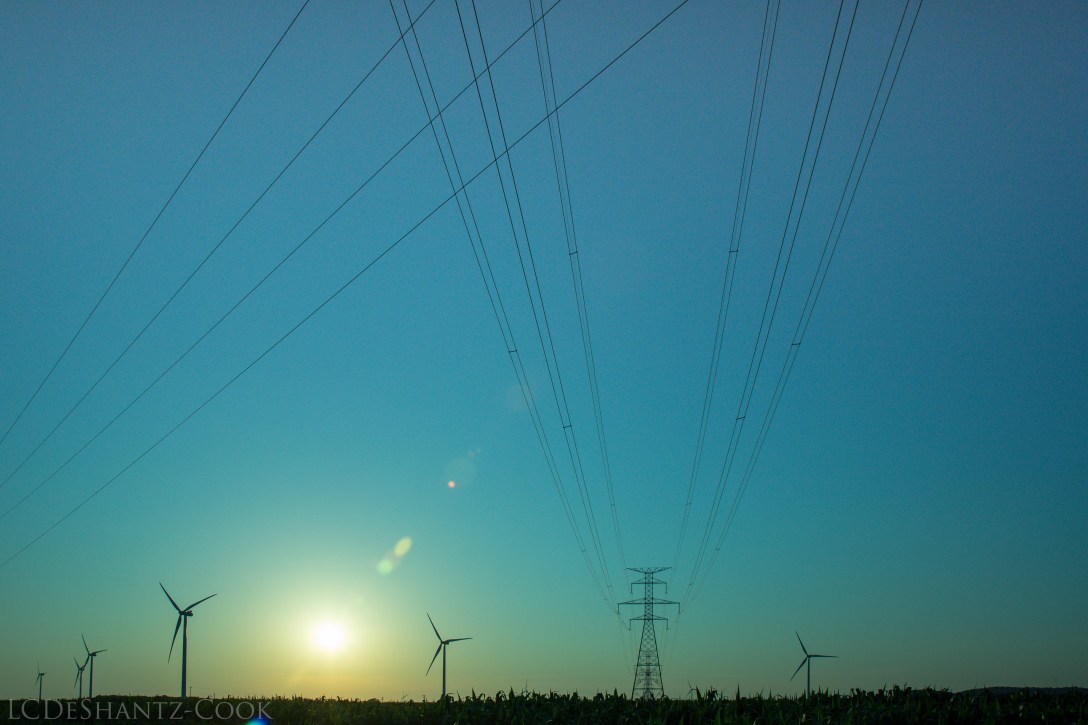
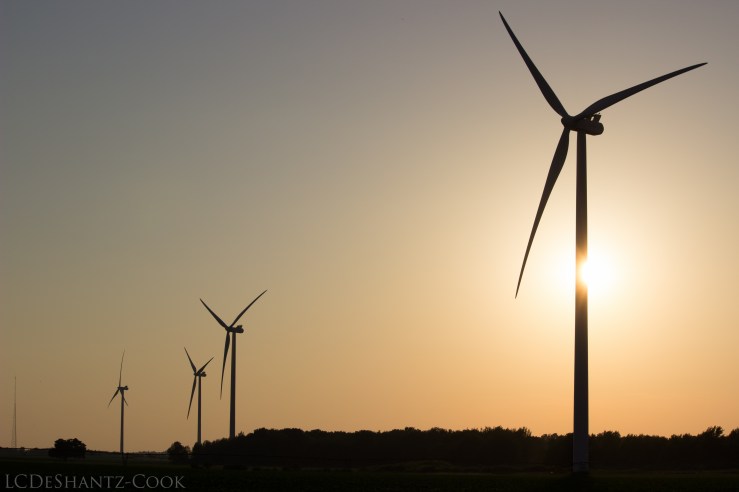
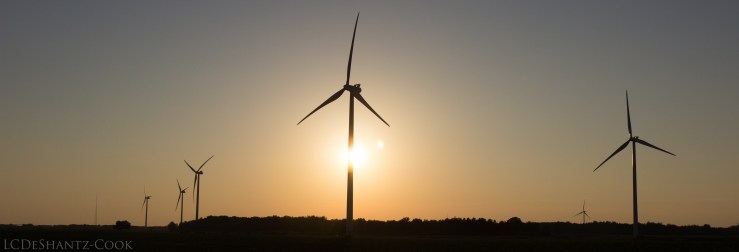
There is a 56-turbine wind farm nearby, in western Michigan. The turbines are the backdrop to rural homes and rolling farmland, stalwart giants towering over corn and grain fields, orchards and farmland.

I’m both drawn to these behemoths and terrified of them. Okay, maybe I watched too many of those original Godzilla movies as a kid, but I swear they will morph, uproot, and come lumbering after me, crushing farms and terrorizing the horses and cows in their path, smoke and fire spittling from their terrible blades, screeching like Godzilla’s adversaries.

deshantzcook_20160711_IMG_9469

Unless you’ve been up close (or, close enough, in my case) you might not realize that they make a humming, whirring, eerie mechanical sound that makes me wonder about the tolerance level of the neighbors. I wouldn’t want this on my farm, near my house, a whir and flickering shadows so definite and inescapable.

What have we done to our landscape?

I’m not opining about the pros and cons of wind energy. I don’t have the knowledge or experience for that, nor am I speaking for anyone who lives near this wind farm; I’m an observant bystander only.

As art, I think they can be beautiful. As neighbor, I don’t know. As for noise, you could say the same about living on the ocean or a big lake–the sound of the waves can be ceaseless. Or living on the plains or open land where the wind howls relentlessly. But those are natural things and in living in those places, you might know what you’re in for. These were planted in people’s backyards one day. Well, not one day, but you get it.

deshantzcook_20160711_IMG_9439

I’m just saying I’m in awe, and a little afraid, and a lot wondering.

Ancient Mariner

Water, water, every where,
And all the boards did shrink;
Water, water, every where,
Nor any drop to drink.

The Rime of the Ancient Mariner, by Samuel Taylor Coleridge

I’ve watched this boat just up the beach for years sit lonely and unused tucked into the grasses on the bluff in front of a cottage, which I can only guess has also been lonely and unused, as it has a for sale sign perched near the steps leading up to it.

12260002
captured on 35mm film last fall as she rested

From the boat’s name, I surmise both the boat and the cottage owner to be one of the beach’s older residents, white haired, probably bearded, a seasoned sailor, maybe at a transition in his life where the boat was too much to handle on his own anymore, bringing it up and down from the dwinding beach, rigging the sail, fixing the ropes.

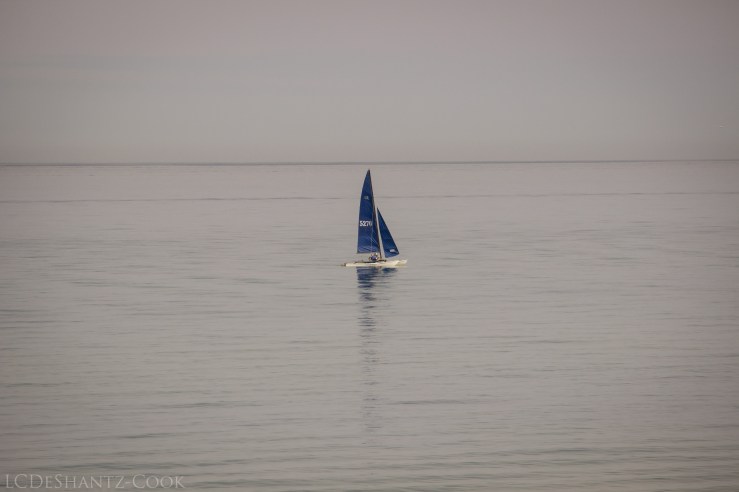
Today as I walked the beach I saw two men rigging her, about to test her in bitter waters and little wind. I asked about the boat and learned that one of them, the owner of a neighboring house, had just bought her and this was about to be his maiden voyage with her.

I didn’t ask, but I wondered if the new owner was going to change her name, as he is definitely not ancient (I don’t know about his mariner status), and may have no connection to the poem. I’m not sure why this makes me so happy, a new owner of this boat and its use after a long rest, but it does–even if the name gets changed. The bluff between the beach and cottages here is dotted with mostly unused small sailboats, Sunfishes and Lasers and Hobies that stand as sentinel to a time before jet skis and kayaks and paddle boards, and most recently, kite boards. The sails are starting to stir again, though.

Things come around.

deshantzcook_20160710_IMG_9238-2
and the Mariner today


Sky drama

I’m a sucker for a dramatic sky. There is no shortage of this on the shores of Lake Michigan, which is fortunate for me. I cannot get enough.

I was in the water, and then lying on the beach in the sun, watching this interesting cloud formation as it moved toward the shore. You can see it in the lower right of this photo just hovering above the lake.

deshantzcook_20160708_IMG_9150-2

It looked like a long finger of a cloud, but with smaller tendrils shooting off of it. It changed shape as it moved and ended up diffusing. The cooler air this little system brought in eventually forced me up to the cottage.

deshantzcook_20160708_IMG_9155

I have to leave here next week, which is always bittersweet. Of course there are things in the city I want to do, but the longer I stay here the more I think about what it would be to give that up. Could I live here year-round? I think I could.

It’s just simpler here.

Because there might be

Today I left the beach briefly in the middle of my workday to go to the post office in town. It’s a short drive, just a few miles on a two-lane paved road, a straight shot east through farmland and orchards. I drive carefully because I know there are farm dogs, raccoon, chipmunks, deer, porcupine, field mice, all manner of living creatures and being the sensitive person I am, I don’t want to take a life (ticks, mosquitoes, black flies, and Very Big Spiders excluded).

And what I was thinking about on this drive, out of nowhere, was my mother.

Of all the ways I didn’t want to be like her, I am most like her in sharing this heightened sensitivity. It just about drove me crazy when I became a driver and I realized how painfully, impossibly slow she drove through the streets of our suburb. Like, 10 miles an hour slow, sometimes (although I may be exaggerating). I remember a conversation with her where, when I complained about the pace, she said she would not drive faster because you never knew when a squirrel or a dog or a cat or a kid might run into the road. She said nothing beyond that, and I probably rolled my eyes and sighed and slumped into the seat like a brooding teenager. But I get it. Because if one of those things did cross her path suddenly, and she couldn’t stop her car in time, it would have been too much for her. Too much for her to hurt or kill something, someone.

And just as that realization began to crystallize in my head I saw, in the dry, earthy field to my right, the young deer that was about to cross my path at breakneck speed. I already knew there was no one behind me so I could safely slow. No one was coming in the opposite lane. She flew across the road at a safe distance in front of my car–I mean really flew–and bounded away through the green field to my left. My breath left me for a moment.

It was these what if’s, the might be’s, that made my mother drive slowly and carefully despite any annoyed passengers. In her driving and in her words, she would have rather stayed slow, quiet and purposeful, than hurt anyone or anything. While it’s not easy to share her sensitive nature, I don’t balk at sharing her refusal to purposely hurt. She believed in love, even though she was wounded, and in weighing her words before speaking. I carry her wounds and her nature if not always her skill at holding her tongue. I believe in love, and peace, and the refusal to be the cause of any being’s pain.

deshantzcook_20160613_IMG_7456

Save