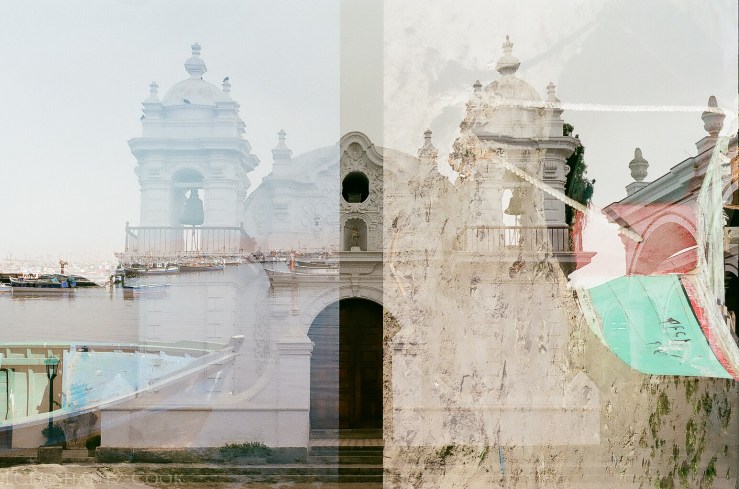
I shot 8 rolls of film in and not too far outside of Lima, Peru, last month when I spent a week with my daughter there. Last week I sent away the roll of film I managed to muck up several ways to be developed by people who know what to do with mucked up rolls. I mucked this up by:
Forgetting to set the correct ISO on my camera when loading the film.
Completely forgetting what kind of film I had in my camera.
Forgetting that the roll had 24 exposures and not 36.
Thinking that my camera was stuck when it wouldn’t advance past 24, and so rewinding it a bit a ton (what was I thinking?) before I realized I was probably shooting over stuff.
Don’t judge me. I was on vacation. Again, I blame the pisco.
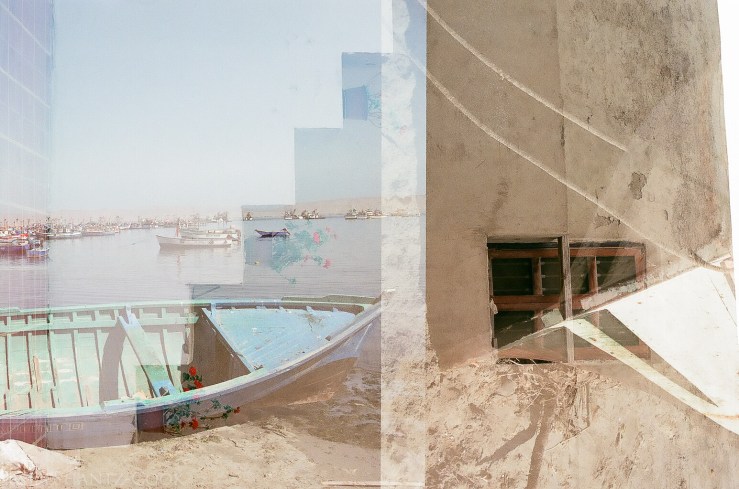
So with all that I wondered what I was going to get. The film is Fuji Superia 400, which I kind of like, but since I shot it at 200 I asked the lab to pull it one stop. The colors on the single-exposed shots are somewhat flat, but I like them. The multiple exposed stuff looks colorful but kind of washed out, too–but, you know, multiple exposures and all. I wish I could say I planned some of these images since I like how they turned out so much, but alas, no such thing. And, these are the lab’s scans. I look forward to scanning them in other ways and putting different frames together. And now I know I want to double-shoot a roll of film. Totally on purpose, though.
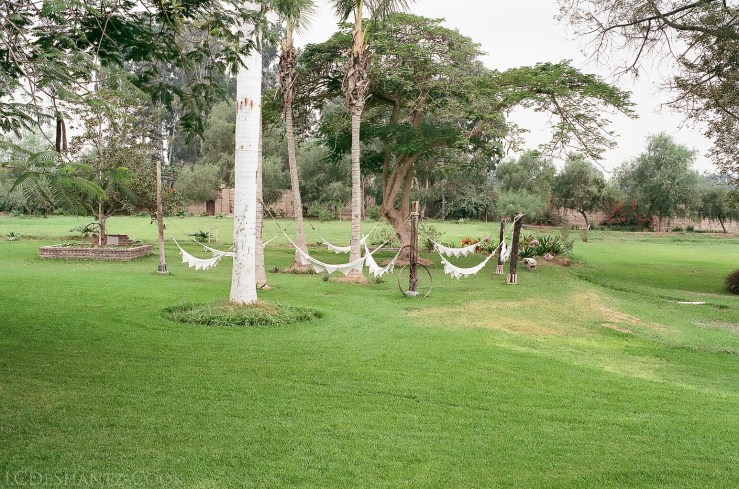
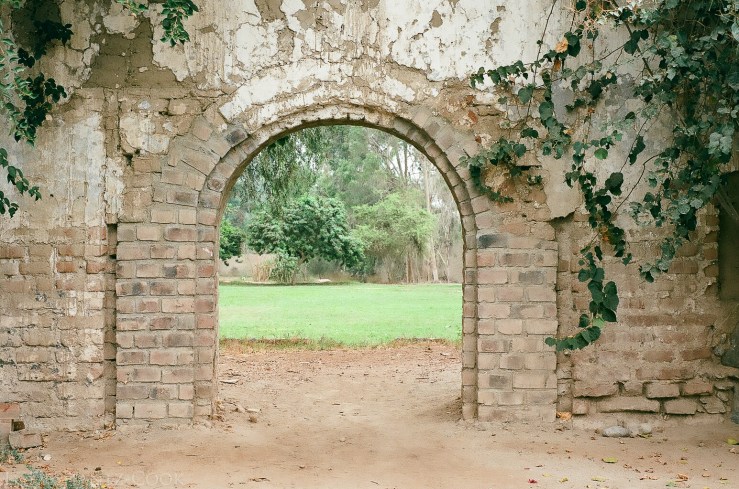
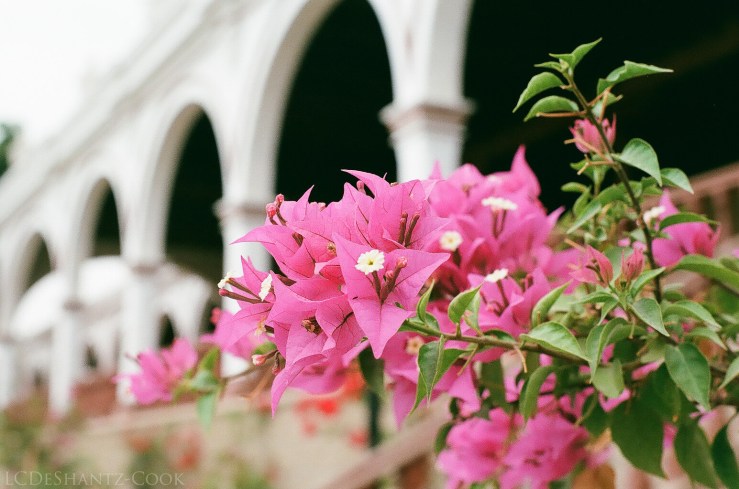
This roll was partly from a tour stop at the Hacienda San Jose in Chincha, which was a brief stop on our way to Paracas.
yard at Hacienda San Jose in Chincha, Peruold garden wall, Hacienda San Joseflowers and porch archesflowers in hacienda yardhacienda garden wall in Chincha, plus boats and beach in Paracashacienda chapel stairs and Paracas boat and beachhacienda chapel and Paracas boatsParacas beach and boats at sunset, town, and hibiscus flowerParacas wanderingsParacas boats and harborParacas, evening sunset and morning harbor
I love how some of the multiple exposed shots end up looking like I ran a roll through a half frame camera and then shot it again through a normal SLR (which gives me an idea…).
Film just continues to amaze and surprise and confound me. Someday I’d like to develop all my film on my own. But until I can commit to the time/effort/hearbreak of that, I’m using two labs to process and scan my color film.
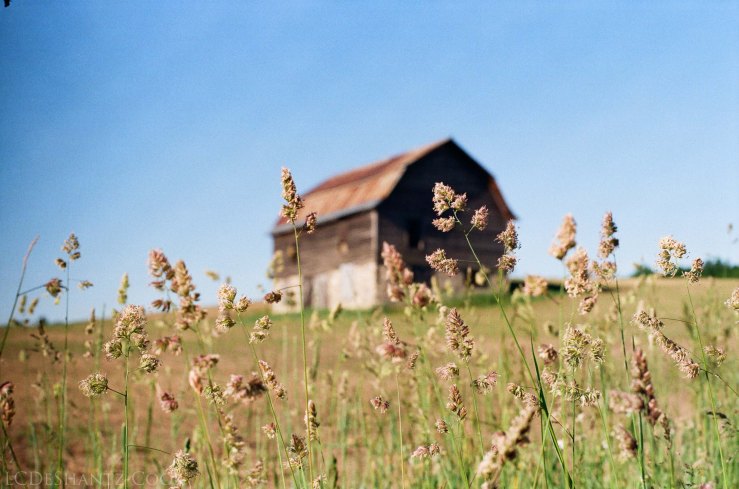
poppy and collapsing farmhouse, Minolta SRT 102poppy sunset, Holga
just poppies from Barb’s garden, Minolta SRT 102
and more poppies, Holga
I haven’t used black and white film since my class ended in early May, but when I do get back to that (and I’ve got some nice films to use up, but summer feels like color to me) I’m planning to get supplies and process that myself now that I feel comfortable with it.
But color film developing feels a little out of my wheelhouse at the moment.
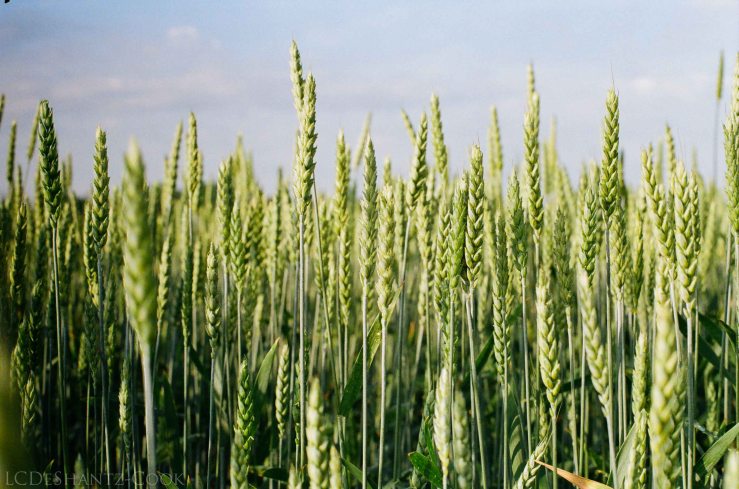
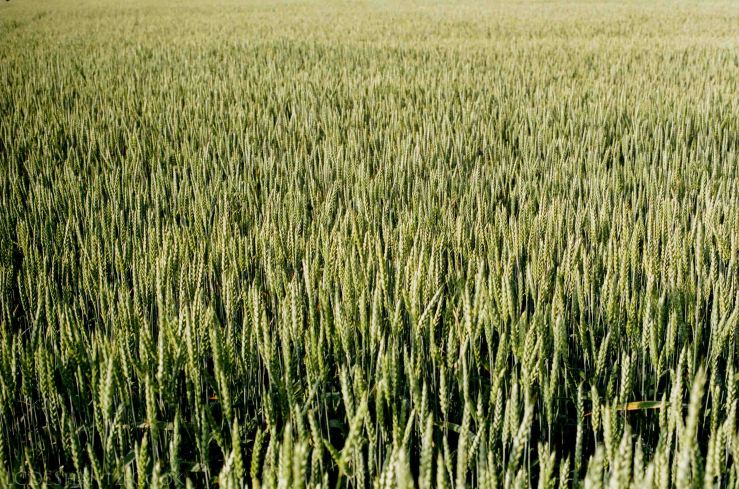
June rye in detail, Minolta SRT 102June rye field, Minolta SRT 102
ox-eye daisies, Minolta SRT 102
chamomile in Barb’s garden, Minolta SRT 102
early season orchard, Minolta SRT 102
I sent four rolls to one lab and two to another this week. The four rolls got processed and scanned and I uploaded them yesterday, with some oddities and surprises, like that purple yumminess I wrote about yesterday. I know I had one roll of expired film so I expected some odd colors, but a lack of decent focus on almost half from this (only 12 exposure) roll makes me think a) I was drinking and shooting, or b) I really need to see my eye doc, or c) something is wrong with my Minolta X-700 (it did give me a bit of trouble in Peru, so there’s that).
Lake Michigan, expired film, lousy focus, Minolta X-700
more of the same
more of the same
Little Sable Point lighthouse, expired film, Minolta X-700
Aside from that, I noticed an odd dot pattern on some other scans, usually in blue sky or where there was a lack of other pattern in the image. This is in some of the images on both 35mm film and 120 film, from different cameras. The lab can’t account for this oddity. I don’t know what to make of it, but whatever. I mean, I’m horrible with film storage (hot, cold, lugged around in bags left in cars, etc.), so maybe I’ve done something to it. If I wanted perfection, I’ve probably picked up the wrong passion.
Holga, look at these dots!
Holga, patterns in sky
Holga, dog photobombed my beach scene, dots in sky
Minolta SRT 102, patterned sky
It’s odd that it’s on some images but not others. Who knows? I’m okay with the mystery.
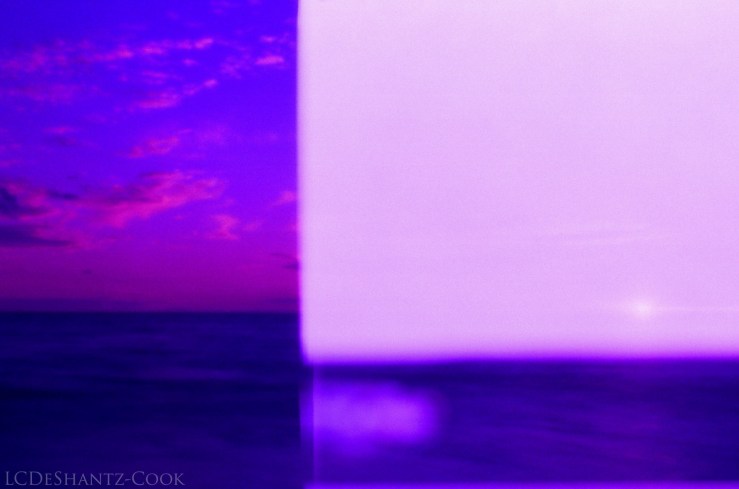
I can’t quite remember what I’ve done here. I do know this image is from an expired roll of film shot with my Minolta X-700. I know I took some digital images of the sunset one evening through a blue, plastic malt jug that got warped from the heat when I ran it through the dishwasher. I don’t remember holding that jug over the lens of any other cameras, but maybe I did? That doesn’t account for the double exposure effect, though–the X-700 can’t even be tricked into doing that.
I know from about half of the other images on this 12-exposure roll that something is not right with that camera. The focus is badly off on these images. Two of them are just terrible, and a few of the other unfocused ones just look, well, unfocused and dreamy (but not terrible, to me anyway). Maybe the film didn’t advance quite right here, among other things.
But I really like this outcome. Sometimes no explanation is just fine.
If you were here and we were talking face to face, I’d make you a cup of coffee right now. This is long. Grab coffee or a drink, or just skim all the wordy bits and look at the photos if you want to see what I saw. (There are earlier posts here and here.)
I picked up my negatives on the way out of town Friday. Unlike some other film photographers I online stalk follow, I have only just delved into film developing and that was only in a class with an amazing lab facility and only with black and white film. I took color film to Peru and to even imagine the setup, the materials, the time to develop color film just all boggles my mind. I’m not there yet. So I took my film to a lab that’s not too far from me. I think they do an amazing job on developing and scanning, and their price is terrific. I shot 8 rolls of film and they developed 7–I accidentally shot a 400 ISO roll at 200 and they can’t process pushed or pulled film, so I’ll have to take that one elsewhere. Anyway, here’s the photographic evidence of my trip. Anything rectangular was shot on a Minolta X-700 with either a 50mm or with a 28-70mm zoom; square shots were on a recent acquisition, a new Holga by Sunrise, whatever that is (but I adore it).
We arrived a bit after 10 pm local time at Jorge Chavez International Airport in Lima. No stress getting our bags, and then we walked out into a massive arena of people waiting and taxi drivers shouting. I’ve always wanted to be one of those people that steps off a plane and looks for a person holding a sign with their name on it–and thanks to our Airbnb host, Saturday night I was! We found our driver almost immediately, who helped us with bags to his car and then expertly drove through Saturday night traffic the 40 minutes to our rented apartment in Miraflores District. It had been a long day and we were tired, so we settled on the bar across the street for a quick drink and a bite–a Liverpool, England and Beatles-themed pub. Two potato dishes and some kind of pisco drink later, we were exhausted and called it a night.
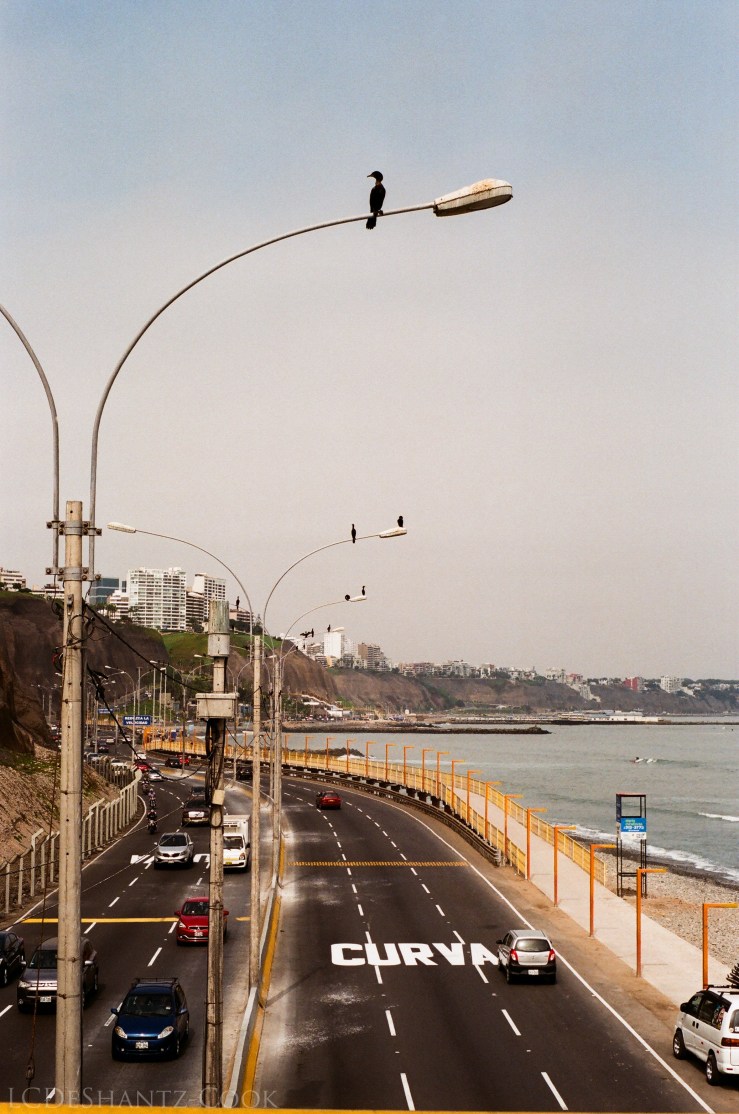
view from walkway over road in Miraflores, Fuji Superior X-tra 400 ISO
Sunday morning dawned a little foggy and a lot steamy. I knew from reading about Lima that it is very muggy pretty much all the time, and in the fall and winter there is often a fog that mists everything up and makes it all the more damp. I wasn’t quite prepared for how hot it felt and wished I’d packed more summery clothes, which was kind of funny because the Lima natives were bundled up most of the time while I was a sweaty mess.
We took our time Sunday morning and my first priority was getting to a place I’d read about online, El Pan de la Chola, which wasn’t far from the apartment–it did not disappoint. Two hearty sandwiches on thick, crusty bread, a shared gooey, oozy, chocolate almond croissant, and two rich cappuccinos later and we were in absolute heaven. We walked the neighborhood a bit more and then headed to the ocean front, where we took the walkway over the highway to dip our toes in the Pacific ocean.
Bella’s Birks, Fuji Superia 400
rocky beach, Kodak Portra 400
surfboard, Fuji Superia 400
surfer, Kodak Portra 400
Bella on the cliff above the Pacific, Kodak Portra 400
And now the rest of that day is vague. I know it involved a trip to the grocery store for bottled water (you can’t drink tap water there), lots of yogurt to eat with the granola we bought at El Pan, more walking the neighborhood and exploring, dinner somewhere.
Monday and Tuesday mornings both started with a workout in the apartment, yogurt and granola for breakfast, then showers with varying degrees of warmth (hot water went quick), and then to the bank in the grocery store to exchange U.S. dollars for Peruvian soles, which was super fun because $60 U.S. gets you almost $200 soles.
I think on Monday we walked to Parque Kennedy where all the cats are, and had dinner at a vegetarian pizza restaurant, which was excellent. Mid day we toured Huaca Pucllana, a pyramid about a half mile from the apartment. These ruins are active research grounds and we found their history fascinating. The one hour tour cost maybe 12 soles, and then we had lunch at the onsite kinda-fancy restaurant where we tried pisco sours for the first time (I wasn’t so sure about the frothy egg white topping but I am now a big fan). Lunch here was good but not earth shattering, and it took forever. Seriously, the place was nearly empty when we sat down, filled up once we were seated, and then emptied again before they brought our check. Service is leisurely in Lima and asking for the check doesn’t necessarily mean you’ll get it in the time you think you should. My kid kept reminding me to calm down. Maybe I should have had a second pisco sour here?
Huaca Pucllana ruins, city beyond, Fuji Superia 400
Huaca Pucllana, Fuji Superia 400
from atop the ruins, Portra 400
Huaca Pucllana, Fuji Superia 400
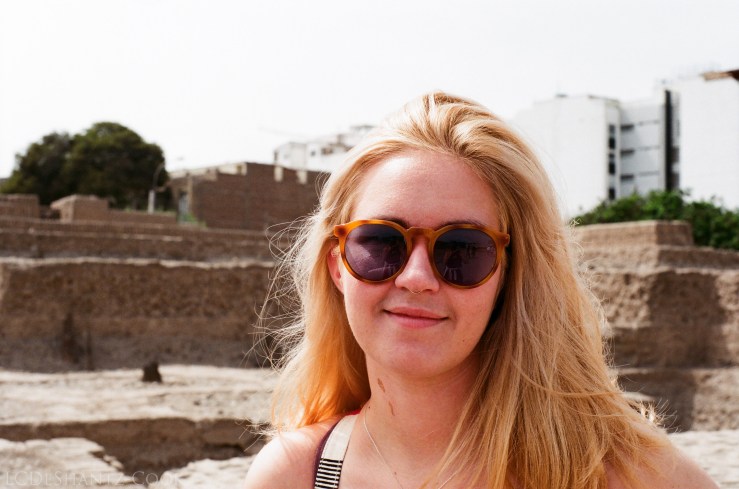
Bella, Fuji Superia 400
Again, foggy details, and maybe my kid will read this and clear things up for me. But I think this was the evening that after we ate pizza we settled into our apartment to call my dad for his birthday, facetime some people back home, and start watching a season of Ru Paul’s Drag Race on Netflix. Because, you know, what else do you do after a long day of exploring some 2800 miles from home?
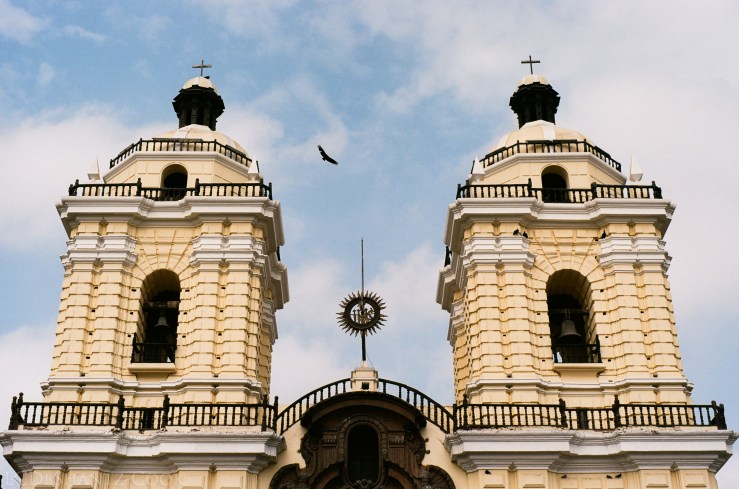
Tuesday I’m nearly certain is the day we took an Uber to Lima’s city center. I knew I wanted to see the Plaza de Armas, which is Lima’s main city square, and the Iglesia y Convento de San Francisco (church and convent of San Francisco). We got a nearly private tour of this absolutely stunning piece of history, a living reminder of Spain’s history in Peru. They don’t let you take pictures inside, which is a little bit of a shame because the light and the shadows and the reflections off tiled floors was right up my alley. But the history of it all was humbling.
Church of San Francisco, Kodak Ektar 100boy playing, pigeons, Kodak Ektar 100
pink buildings, Lima city center, Kodak Ektar 100
merchant alley in city center, Kodak Ektar 100
Lima city center, Kodak Ektar 100
Lima city center, Kodak Ektar 100
Lima city center, Kodak Ektar 100
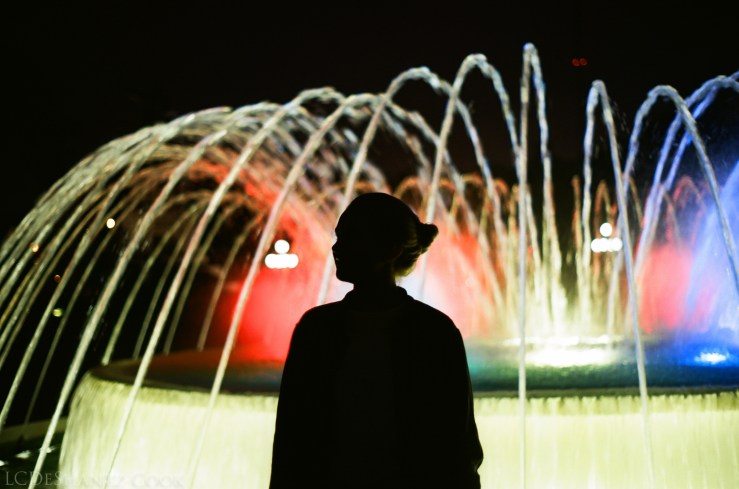
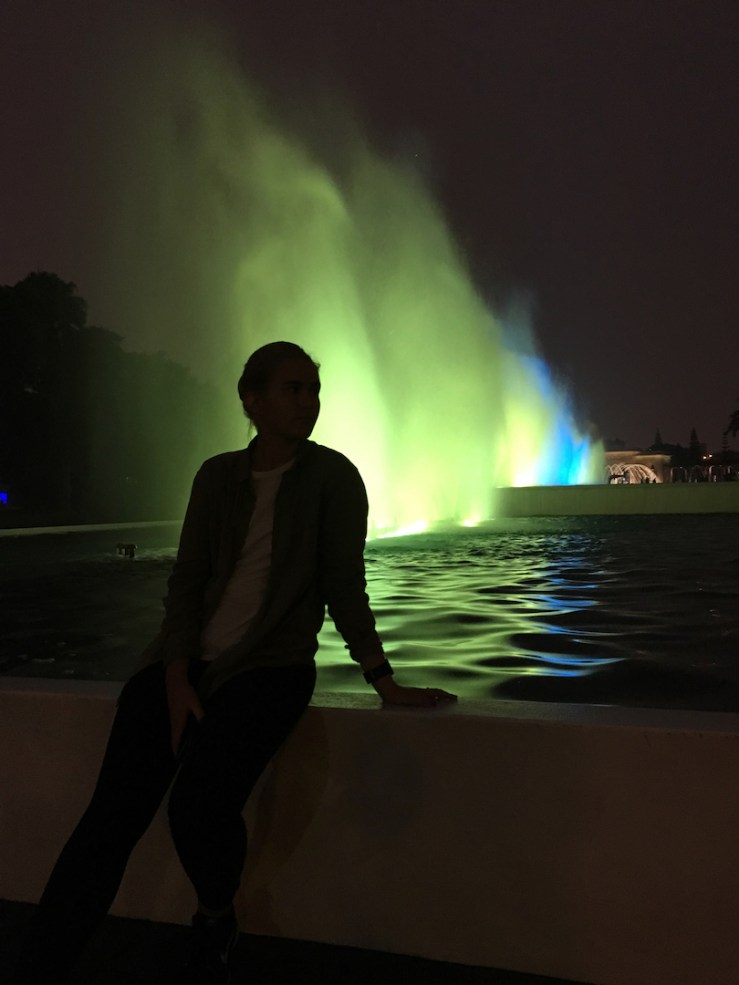
From the city center we walked to the Magic Water Circuit in the Parque de la Reserva to see the water fountains that light up after dark. We got there in daylight and wandered a bit, sat a bit, hooked up to wifi and zoned out on our phones for a bit. Once the sun went down and the fountains started to light up, though, we were like kids. We didn’t want to get soaked so we didn’t go in the interactive one, but walked through the tunnel fountain probably a dozen times because it was really fun.
Bella silhouette and fountain, Kodak Ektar 100
interactive fountain, iPhone
main fountain, iPhone
tunnel fountain, iPhone
We had a bus to catch super early Wednesday morning, so we Uber’d home after this and then ran over to the grocery store for snacks and water to take with us on the bus.
Wednesday morning came too early. We were picked up in front of the apartment by a Peru Hop bus; we’d booked a two-day trip north to Paracas and Huacachina and our pick up was 6:30 a.m. I didn’t know what to expect from this tour, which included an overnight in a hostel in the small, coastal town of Paracas. I’ve never hosteled before. Or, at least not as an adult. And, the trip included a thing on day two that I was at this point starting to get kind of nervous about–a dune buggy tour and sandboarding. Not that I’m scared of these things… but the potential for something unforeseen to happen doing something adventurous was starting to sink into the part of my brain that handles all the responsible adult stuff. I kept trying to push thoughts of buggies overturning or crashing out of my head.
Day one of the bus tour had us stop at a roadside restaurant for a Peruvian specialty whose name escapes me, but it was little patties of bread with either meat, cheese, or olives baked inside. The stop was quick and we realized too late that we should have ordered more of these yummy things, but we had a timetable to keep on. Next stop was at a hacienda in Chincha–once a wealthy family’s home and now a hotel. The family owned the place for centuries and there was a brisk and brutal slave trade running through here. The earthquake in 2007 apparently unearthed a network of many kilometers of tunnels used for this slave trade, plus tunnels beneath the hacienda where the slaves lived and worked. We toured the tunnels and although I’m not claustrophobic I had a moment of panic as 18 of us jammed into a “room” not much bigger than an expanded oval-shaped dining room table. It was hot and the air felt chalky–everyone was coughing and sweating and our lovely guide kept us in there too long. I would have fared better with a pisco sour on board.
I don’t have any photos from most of this day. This was the day I popped a roll of 400 speed Fuji Superia into my camera but forgot to change the ISO setting to 400. I took some photos of the hacienda grounds, the vast porch and the onsite church and some blooming trellises. I also later screwed this roll up… when it stopped advancing at 24 (I thought I had a 36-shot roll of film in), I decided to rewind the roll a bit because I thought the film had gotten stuck. So, this one will be a surprise when I get it back–maybe doubles and some weirdness.
I didn’t want to sleep on the bus because the passing scenery was like nothing I’ve ever experienced–mountainous at times, the ocean at times, shanty towns and half-built or half-ruined neighborhoods, poverty beyond scope amidst fenced and gated homesteads. At one point we went through a section of land that was so foggy I’m not sure how the driver managed.
Once we landed in Paracas the sun was wildly bright. It was mid-afternoon and we checked into our little hostel room and then headed out to see the town. Which is about two city blocks. Hostels, restaurants, cab drivers, street merchants, a beach, boats. Not much to it, but colorful and kind of a sensory attack. We had lunch and then had to nap a bit before walking around to take some sunset photos and then meet some others from our bus for dinner.
lifeguard tower, Kodak Ektar 100
boater’s pier, Kodak Ektar 100
The next morning we were supposed to go on a boat tour of the Ballestas Islands, where we would have seen penguins and sea lions and sea birds and other wildlife, but alas, no boats were going out due to winds. Bella read by the pool while I wandered with cameras. I paid $2 soles to walk out onto the pier the fishermen use to get to their boats. The photos I took in Paracas on the Holga remind me why Kodak Ektar 100 is my favorite film right now. I can’t get enough of the colors!
pelican on pier
boat in bay
Paracas boats
construction
hostel and powerlines
fishing boat
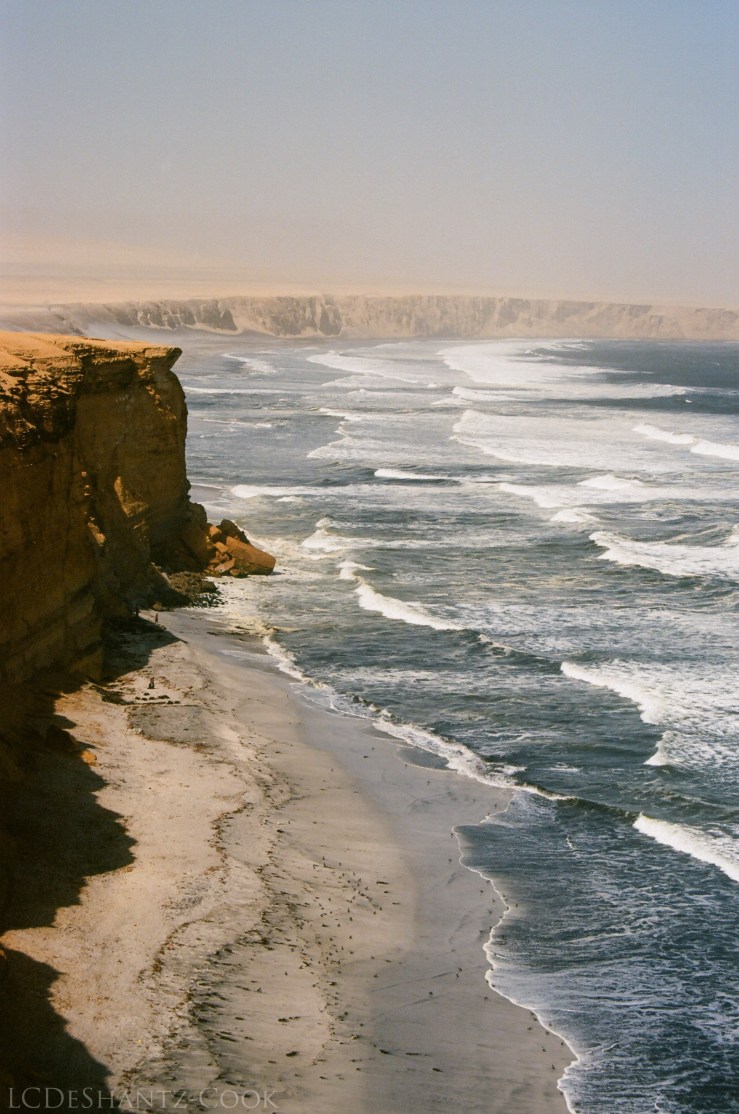
So the morning dragged a bit without much to do, but by afternoon we boarded the bus for the next activity, a spin through Paracas National Reserve. I’d seen images online of amazing cliffs with a pounding ocean below and I couldn’t wait to see this, but I’ll admit the bus tour of it was a little disappointing. We made two brief stops to hop out and get sandblasted and take pictures. If I’d done my research I might have planned for a whole day here and we could have taken a cab from Paracas and spent the day exploring this place. Still, we were awed by the beauty.
la catedral, Paracas National Reserve, Kodak Ektar 100cliffs in Paracas National Reserve, Kodak Ektar 100
Apparently the 2007 earthquake changed the landscape here–that hunk of rock in the ocean was once larger and linked to the cliffs pre-earthquake. The wind here was wild. We left with fine sand in our teeth, glued to our lip balm, in our scalp and ears.
cliffs and ocean, Paracas National Reserve, Kodak Ektar 100cliffs and ocean, Paracas National Reserve, Kodak Ektar 100
From here we went back to the town of Paracas where we dropped some passengers and picked others up for the trip to Huacachina for dune buggies and sandboarding. My tension was mounting, as was the pit in my stomach from hunger. I may have nodded off on the trip there, but once there we had an hour before the buggy tour and we needed food, pronto.
paddleboats in pond, dunes beyond, Kodak Ektar 100
red building against blue sky in Huacachina, Kodak Ektar 100
Huacachina is even smaller than Paracas. It is literally an oasis in the desert. There is a small pond, a villa that used to belong to someone wealthy but that now is a hostel; a few more hostels, a few restaurants, all surrounded by mountainous dunes and teeming with hot and tired looking backpackers and dune buggy drivers. The thick smell of exhaust from the buggies was utterly intoxicating (not in a good way) and was adding to my growing anxiety. We stored our bags in a sideroom of the main hostel and I worried about them being stolen. We did a quick spin through town the tiny town and then sat down at the restaurant attached to the main hostel, where we ordered pasta because we were starving and it sounded good and we thought it would be quick. With only minutes to spare before our tour was to leave, we wolfed down massive plates of pasta and hoped they wouldn’t show up on the Huacachina dunes (luckily they did not).
buggy and riders atop dune, Kodak Ektar 100
The driver was wild. We made a few stops to sightsee and he wasn’t too worried about us getting strapped into our seats before he zoomed off again (can you feel my nerves getting even more frayed here?). There were 10 of us in the buggy and the two young girls in the seat with me and Bella were more concerned about strapping me in than about their own welfare, which was awfully sweet. Just as I started to settle in and shove my fear down, we stopped for our first foray into sandboarding, which you could either do standing on the board (there were straps to velcro your feet into) or you could lie headfirst, your hands gripping the front straps. We all opted for lying and I will tell you, when our driver started handing out the boards I flat out refused. Bella gently nudged. The other young people in our car offered encouragement. I wanted to do it but worried I’d look silly. I grabbed the board and when it was my turn, I went down, shouting like an idiot and laughing my head off. Hooked!
So for the rest of the time I didn’t bother to get a camera out, but was loving the stops to slide down hills that got bigger, longer, and sometimes faster each stop.
buggy shadow, Kodak Ektar 100
dune buggy tour, Kodak Ektar 100
Huacachina dunes, Kodak Ektar 100
Huacachina dunes, Kodak Ektar 100
Until my kid got hurt. I won’t tell her story, but she was involved in a crash at the bottom of a hill and I was at the top of the hill and I felt a couple of years of life leave my body. All my fears were suddenly founded, I went through all the possible horrible scenarios in my head in the (probably only seconds of) time it took for her to stand up and answer that she was okay. Once I got to the bottom I saw that she was banged up and cut up and in some real pain. But because she is one hell of a tough woman, she was able to enjoy the rest of the tour, which we weren’t even at the halfway point of when this happened. We still boarded the rest of the hills and laughed and communed with our other passengers.
sunset over Huacachina dunes, Kodak Ektar 100
After cleaning up Bella’s wounds and getting our bag from the hostel, we had to board the bus that would take us back to Lima. I don’t remember much of the trip because we both (thankfully) slept much of it, but we arrived back to the Lima apartment dirty, gritty, tired, and one of us quite sore. I was grateful to not have to spend that night in a hostel but in a very comfy bed in a modern apartment with cold water and creamy yogurt in the fridge and warm water for showers in the tap.
The next day we met the family responsible for the educational program that brought my daughter Bella to Peru. They took us to lunch and then welcomed us warmly into their home. I stayed at the apartment Friday night while Bella hung out with the people she would be working with for the next three weeks. Saturday we packed up our belongings and she left for her next adventure. I walked down to the park and the Pacific ocean one last time before my travels back home.
goodbye Miraflores, Kodak Ektar 100
stairs down from Miraflores, Kodak Ektar 100
Miraflores cliffs, Kodak Ektar 100
Miraflores cliffs, Kodak Ektar 100
________________________
The reason for this trip was that my daughter Bella is teaching computer science in an afterschool program at a private school in a very nice suburb of Lima. I could not be more proud of her and she asked me to join her for this week before her program started. As I’m writing this now, one week after I’ve been home, she has one week of the program under her belt. I still have more to say about Lima but wanted to get photos out and some of the logistics written before I totally forgot.
Some randomness:
The smells were overwhelming: exhaust and cars, food, the ocean–all pungent and at times too much for me, but also exciting and different.
The driving is insane: we learned quickly to cross streets fast, the horns are constant, drivers are not distracted like they are in the U.S.–they are entirely focused. The horns, like the smells, got exhausting and overwhelming.
Dogs are everywhere: there are tons of stray dogs almost everywhere we went (not in Miraflores, though) and particularly in Paracas, where if you’re just standing around they sort of insert themselves into your crowd, which is entertaining, but also sad because they all limp, or have missing tails, or are visibly banged up in other ways. Scrappy panhandlers.
Sometimes I felt daunted about going out because it got a little exhausting to communicate. I felt bad that I didn’t know more Spanish, and really appreciated that most people we came across seemed patient and tried to work with us. I want to do better next time I travel to a place where English is not the native language.
It’s okay to get annoyed with each other when you are traveling with someone. It’s going to happen. Pisco sours smooth things quickly.
I wouldn’t have traded this week with my daughter for the world, even with the couple of hiccups.
Yep, would have been nice to see Machu Picchu, but we couldn’t fit it in. Maybe another trip, and I’d like to do it hiking.
In just over one week I will be traveling to Lima, Peru. I’ll spend a week there with my daughter, and then I’ll leave her and she’ll go off to teach smart computer-coding things to some high school students. How brave is that? When she told me she was doing this through her university, she had the audacity to chide me for allowing her to study Latin as her college language choice. Ha! Like I’ve ever had any influence over this kid. Pffft.
(I remember distinctly suggesting Spanish to her. I wish I’d studied it but I did not have a language requirement in college. So, kid, I told you so.)
In any case, we will explore Lima together for one week and although in some ways this terrifies me, I’m far more terrified of the idea of her traipsing about Lima all on her own. Capable as she is, Lima feels so… out of my comfort zone and therefore a scary place to dump my firstborn. My own Spanish is limited to what I learned in second grade from my favorite teacher, who spoke Spanish as her native language and taught all her students how to count to 10, say good morning to her, and maybe a few other key phrases that are escaping me right now. So the kid and I will struggle with our Spanish together.
When my daughter asked me to join her and I agreed to do this, I immediately decided that I would not bring my DSLR but would bring one 35mm film camera and maybe a second “fun” camera. I read that you can only bring one camera into the country, but I can’t find really good information on this… the second one might incur a charge rather than getting confiscated or anything dramatic.
The Minolta SRT 102 is heavy, but it’s my favorite at the moment and even if I don’t use this feature, I can do easy double exposures. The Minolta X-700 is lighter. And, the self-timer on it works. And, it has a program feature in case I don’t want to think about anything other than focusing. I have two additional lenses (aside from 50mm lenses) for either Minolta, in case I have room for an additional lens. The Pentax K1000? Bombproof, easy; but no extra features and no doubles. Okay, the Pentax is out of the running.
And then I fell in love with 120mm film after using it for several months in my son’s Mamiya 645 1000s. But, no way can I add that behomoth to my bag and, well, it’s not mine. I picked up a Holga, or really a knockoff Holga, and have had a ton of fun with that so far. If that fell off a bridge or got stolen I’d shed a tear but not be put out other than sad that I had 120 film and nothing to shoot it with. It’s smallish, cheap and plastic and I won’t worry about it one bit. The knockoff Holga is going. I have big plans for it.
So I think I’ve narrowed things down to one of the Minolta’s and the Holga. I have some Ektar 100 and some Portra 400 in 120mm color film and some Tri-X 400 and Fuji Acros 100 in 120mm black and white. For 35mm film I have some Ektar 100 and some other odds and ends, but I may have to pick up some more 35mm film. And how many rolls? Ah, another conundrum. I read I can only bring 10–but I can pack some in my daughter’s carry-on or I can simply declare more (I don’t know what that means. An additional charge?)
But then I start to second guess myself.
Should the DSLR come with me? Pros: No film to carry. Big memory card. I can take a million photos and I can see them immediately. Cons: Increases the technology I would want to bring (laptop to upload, or thingy needed to transfer images from SD card to my iPad). I’d spend more time uploading and editing every night and less time seeing/doing things. It’s big and conspicuous. If I broke it, dropped it, or it got stolen I’d be pretty devastated. If I bring it, I don’t really have room for a film camera.
Does anyone else obsess over these things? I’m arguing with myself about all of this. I am firm one day, up in the air the next.
I like the idea of relegating this trip to only film. If I miss a shot, I miss a shot. I know with digital I’m trigger happy–but who needs a million shots with only a few being images I really love? With film I’m much more deliberate. I might make some really bad shots but even those will have meaning (to me, anyway). I’m not saying one is better than the other–it’s all about where my head is, my process and exploration with both mediums. Right now it’s film. Tomorrow might be different.
So, what would you do? You know, just for the sake of discussion. And to help me quit obsessing over this decision. Even though I know what I’m going to do.
I don’t have a green thumb (or a purple one). I love plants, but it’s not in my nature to take care of them. Maybe some day.
There is a hoya plant in my front window that faces south, a big, lovely picture window. It’s about the same size as the picture window in the house I grew up in, which also faced south (faced? faces? The house, and the window, both still exist…). These are the kind of windows that, in February, beg you to lay on the floor in a winter sunbeam and soak up the light. If you don’t have one of these, find a friend that does and spend a February afternoon doing just that.
Anyway.
The hoya plant in my front window is a clipping from my friend Kelly’s hoya plant, who got the clipping from my dad from the original hoya plant that I grew up watching grow in my lovely south-facing picture window in the house I grew up in. I don’t remember who gave my dad the original clipping from their own hoya plant–probably one of his teacher friends–at least 40 years ago.
My dad planted the hoya–which really was just a little tendril and maybe one or two thick leaves sticking up from the earth–in a little pot. It grew, slowly. It was supposed to bloom but it seemed we had it for years before it surprised us one year, maybe around Christmas, with the most delicious-smelling bloom, a funky waxy-looking thing with little florets. My dad built a trellis for it and it climbed and bloomed and the blooms smelled terrific and everyone lived happily ever after.
(Okay, I went away to college and then moved away and forgot about the hoya.)
But at some point in my early adulthood my dad gave my friend Kelly a clipping of that hoya, and some years ago Kelly gave me a clipping from that hoya, and now I have it in my front room, growing profoundly slowly and appreciated by me but cared for by my husband. It hasn’t bloomed yet, but I’m hopeful.
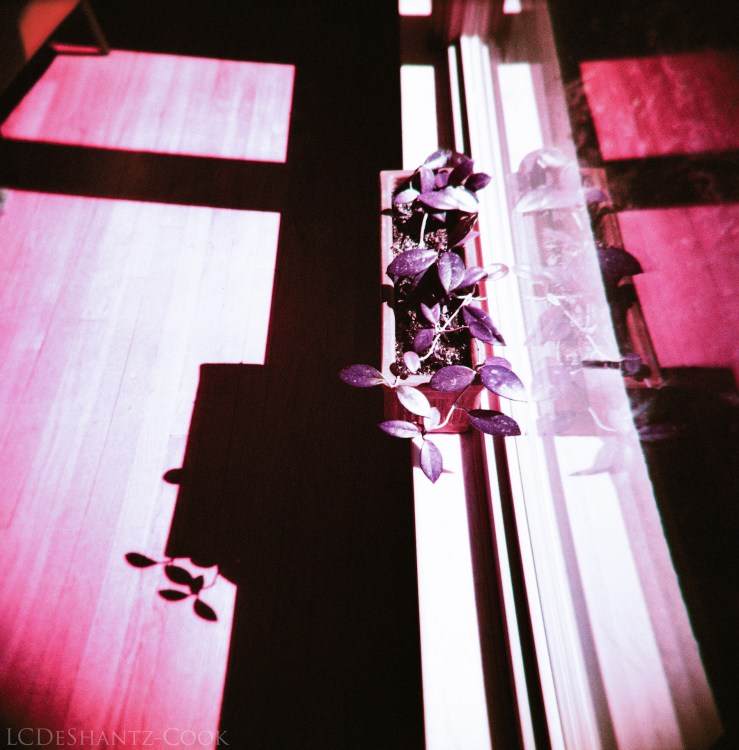
Of course I had to photograph it in purple film on a Holga, which I thought fitting for kind of a funky plant. But aren’t the shadows lovely?
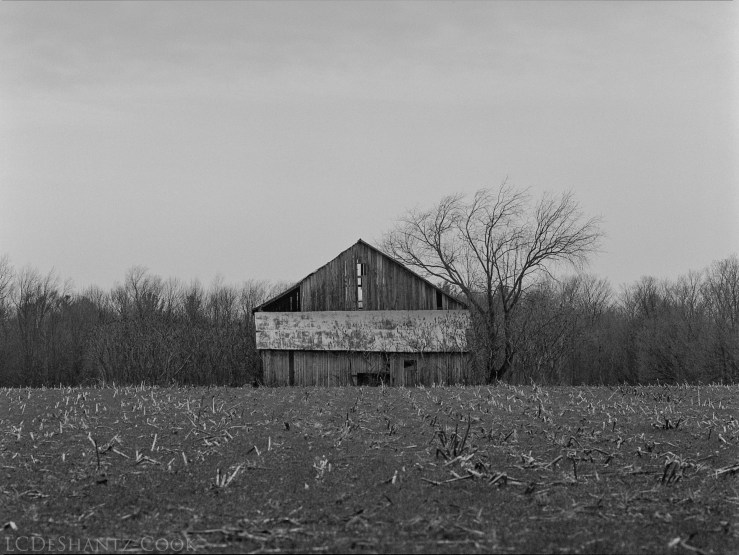
barn and field, Kodak Tri-X, Mamiya 645 1000sleaning shed, Fuji Acros, Mamiya 645 1000s
In between a work trip. My film photography class is ending. Then a vacation to an unknown and, to me, exotic place. Then a move from town to the beach for the summer. And in the meantime I feel the unease of my kids as they finish their college terms. Does that part ever end, I wonder–the part where you feel the pain of whatever stress or difficulty your (albeit adult) children are going through? Somehow I don’t think I was totally prepared for that part of parenting.
Oh but who am I kidding? All the parts of parenting have surprised me. Why would I think that now, because they are grown, it should be any different?
White River Light, Kodak Tri-X, Mamiya 645 1000s
In any case I feel such a sense of limbo right now. I’m trying to roll with it.
And speaking of rolls… I have been frantically shooting film like I have the budget of someone who has, well, a big budget for film. I’m a copy editor, after all, and last I checked no one ever said they wanted to go into copy editing to make the big bucks. But here I am buying and blowing through rolls of film like they’re free or something.
creeping juniper, Ilford FP4, Minolta SRT 102new shoots on the forest floor, Ilford FP4, Minolta SRT 102
I have developed 22 rolls of black and white film for my class and will develop three more this week before the lab will be off limits. I had four rolls of color film developed in February; I’ve got five rolls of color film at a lab right now, and had two rolls of color film developed a few weeks ago. That’s 36 rolls of film shot and developed since January. Of nothing special, even. I could have far worse vices, right?
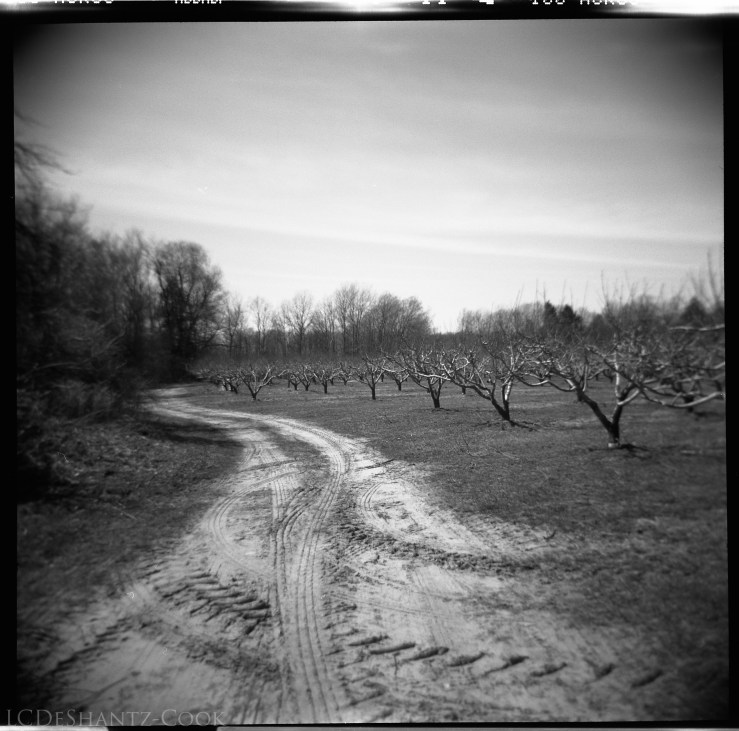
orchard road, Fuji Acros, Holga
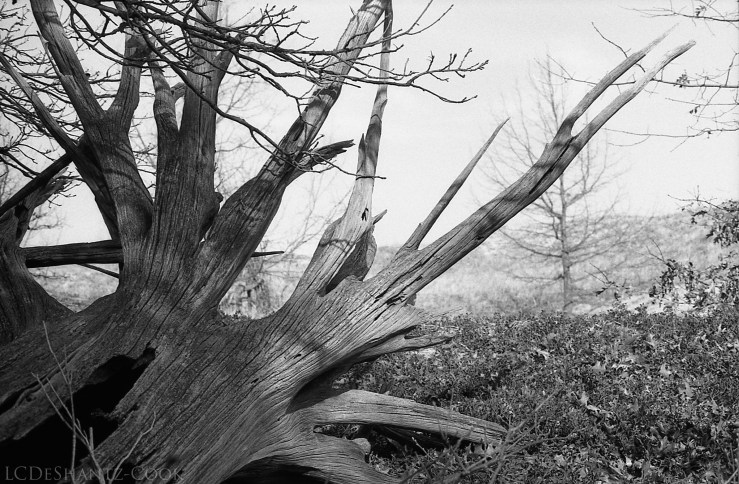
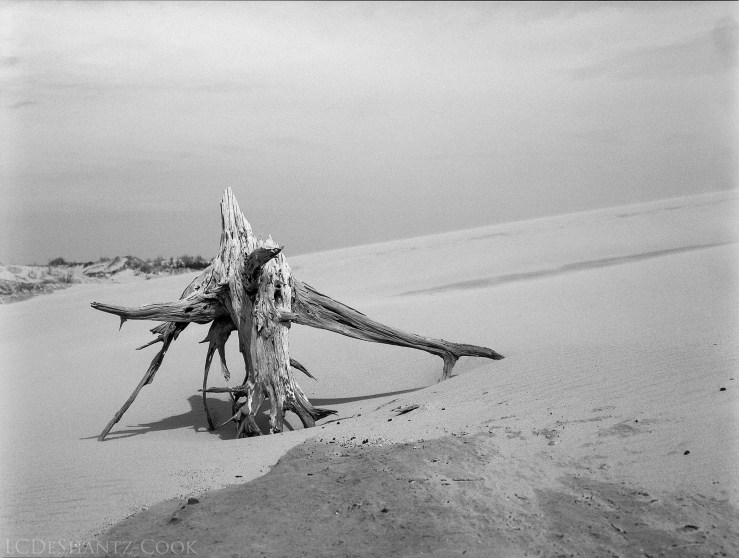
For my last class assignment I wanted to photograph a thing I love. The sand dunes at Silver Lake offer a shifting landscape that at times buries and other times unearths the ghostly treasures of its past. I’ll never tire of hiking these dunes and coming across these alien, sculptural roots and trunks of the trees that once forested this landscape. The light cooperated, but I found the resulting photos an interesting juxtaposition–these images look serene, but the wind was so fierce it nearly knocked me off the tops of some dune ridges and sand came out of my scalp for two days after I got home.
I still have so many more to scan, and a few might show how windy it really was.
long shadows on the dune, Fuji Acros and Holga
driftwood and dunegrass in valley, Fuji Acros and Holga
driftwood, Fuji Acros and Holga
waves, Fuji Acros and Holga
resting under a live tree, Ilford FP4, Minolta SRT 102
one corner left, Fuji Neopan Acros, 100 ISO, Holga
There’s just a corner left standing after this winter. I’ve been watching this farmhouse in west Michigan deteriorate for decades. Really, for my entire life since it has been empty as long as I’ve known it.
I have always been fascinated by this house and I’ll mourn the day there’s nothing left to see, but until then I’ll keep photographing it so that I can hold the image of it and the stories I’ve created for it in my mind.



























 I dream of sumac and milkweed (and other wild things)