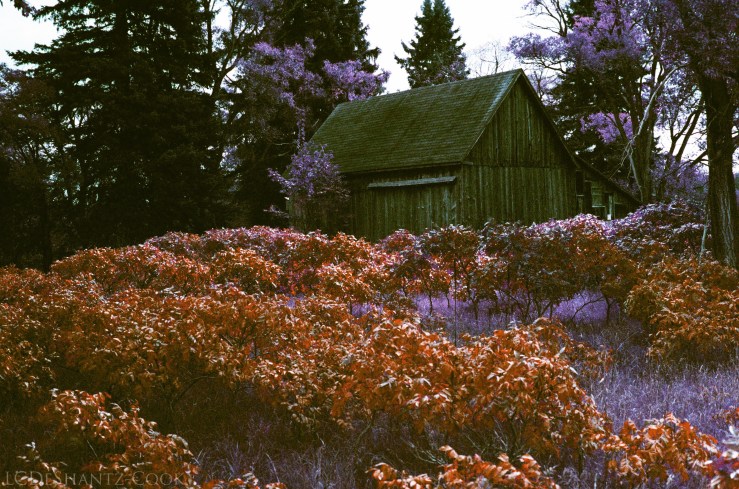
abandoned farmhouse in Lomography Lomochrome Purple film
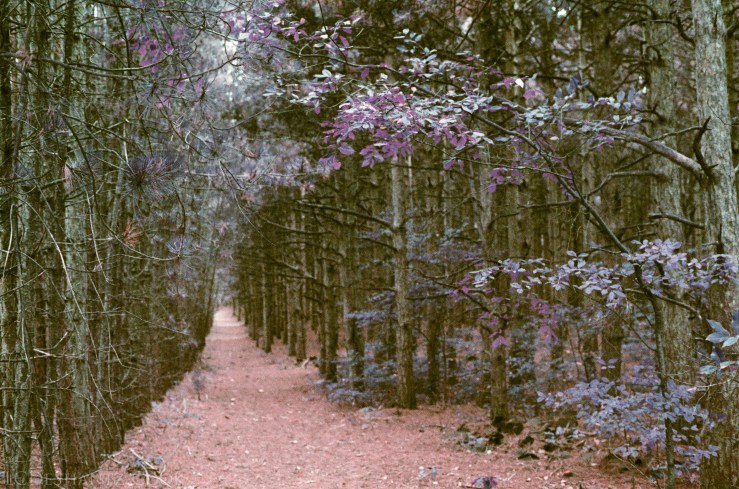
A few weeks ago I spent a small fortune on a few rolls of Lomography Lomochrome Purple film on a whim. Because, well, I’m in an experimental phase here and I’m rolling with that. But really, it’s like magic, this film–it turns greens purple (but only sometimes) and mucks about with other colors in weird and wonderful ways and yes, I do know that I can do that in Photoshop but I want to create magic right in my camera with no other faffing around. And I want to be surprised by what I get when my film is developed. And I don’t want to control everything. (I take that back. I kind of like control, but not where film photography is concerned. I am still in love with the surprises there.)
So I put one roll in my Minolta SRT 102 and after that I ran another through my Olympus Pen EE3. Was I surprised? Yes. Delighted? Totally.
Will I use this film again? Yes, oh yes. And I can’t wait.
In the meantime, here are some favorites from those two rolls.
Minolta SRT 102
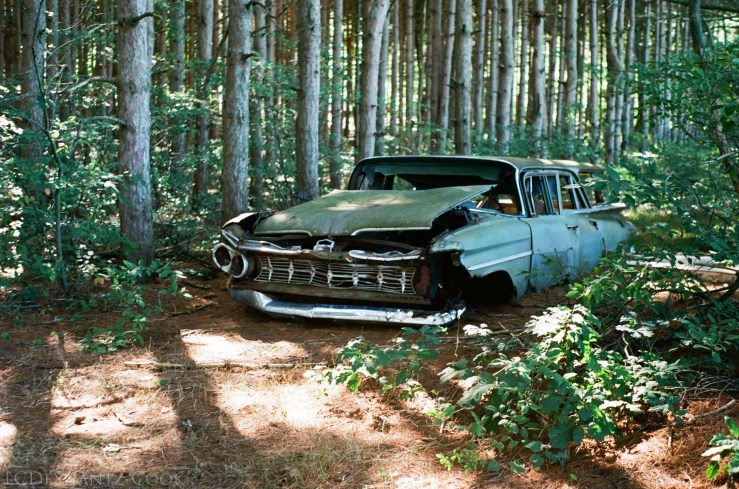
sumac in foreground, abandoned barndiamond window shed, sumacpine needles suspended in web, abandoned car in forestpine forestforest floor, dried pine needles, mushroom and green (purple) mossforest and lightpumpkins get a deeper orange in lomo purplesmall lake, lily pads and reflectionslake and reflection through trees
Olympus Pen EE3
train tracks and vinesshadows and alleywaylines, shadows, and time transport box (okay, probably not)foggy woods, road after the fog clearedcountry roadsorchardorchard and plowed fieldmulticolored trees and old shedfields, treesgrassy road, more sumacsumac and milkweed, roadside
I’m burning through 35mm film like it’s my job lately (a job for which I pay, rather than get paid, apparently). Maybe it’s the lure of all the beautiful colors and the changing season? I’m not sure, but I’m fairly obsessed. I’m not picky, though–I’ll put anything in my camera(s). I’m learning the particularities of a few different cameras, which film the cameras like, the results I like. For instance, I learned in August that I like Agfa 200 in the Olympus Pens–a lot. It’s cheap and the colors come out a little gawdy, which I like for the half frame format.
It’s also a nice film (because of its price) to test new cameras with. In August, I picked up a Minolta SRT-102. It’s so clean I’m not sure it was ever even used, maybe just bought and used once or twice and then tucked into a box for 40 years? I’ll never know its story.
Last week I sent three rolls of film from mid-late September to early October to The Darkroom for processing. I’ve used them for a few years and have recently tried some others, but think I need to stick with The Darkroom–they do a bang-up job, have great customer service, and get my stuff back to me pretty quick considering they are in California and I’m across the country in Michigan. These images aren’t edited at all–just processed and scanned by The Darkroom (I only added my watermark in Lightroom).
Minolta SRT-102
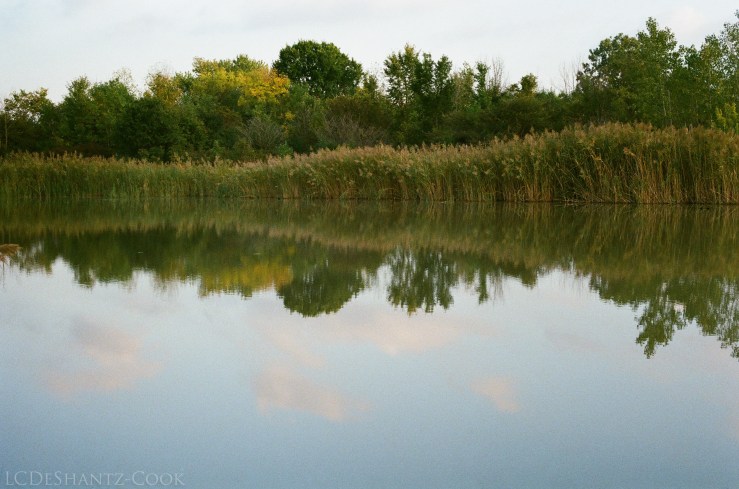
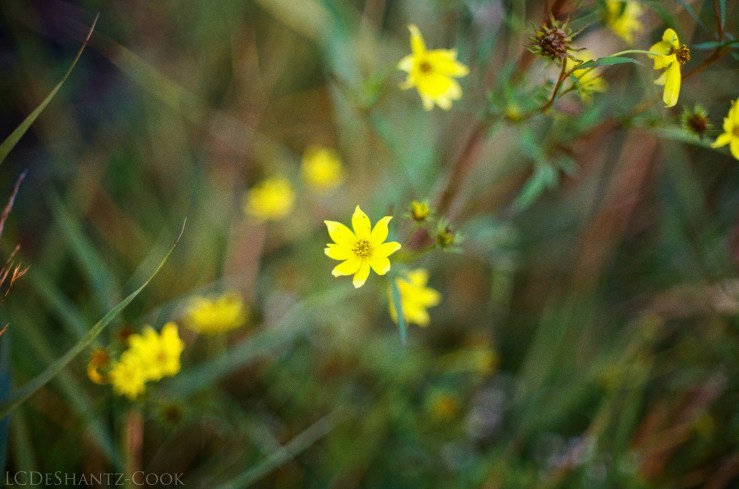
Small pond in a marshy area at a local high school, SRT-102, Agfa 200yellow wildflower (I’m kind of in love with the color)goldenrod in sun
The SRT-102 is an interesting camera, though, with a bit of a learning curve–in the viewfinder, you match one needle to another needle with a circle on the end to get the right exposure. It’s a little awkward for me and will take some getting used to and I wasn’t convinced the meter was working accurately, but the test roll seems to show otherwise, which makes me happy because it’s a really beautiful camera, heavy and solid in hand. In fact, I was so hopeful that the camera would work that I ran a second roll of film through it before I got this test roll back. I shot most of the rest of the first SRT-102 roll in October, so I’ll get back to September’s film…
Pentax K1000
I popped a roll of Kodak Ektar 100 into my trusty Pentax K1000 in mid-September. That Ektar might just be my favorite film right now–I mean, look at that red! And even though I’m really digging the SRT-102, I’m not giving up the Pentax. It’s a joy to use, fun and easy and not the least bit finicky. Again I’ve not made a single edit to these, which may be more a credit to the processing than my ability to pick the correct exposure.
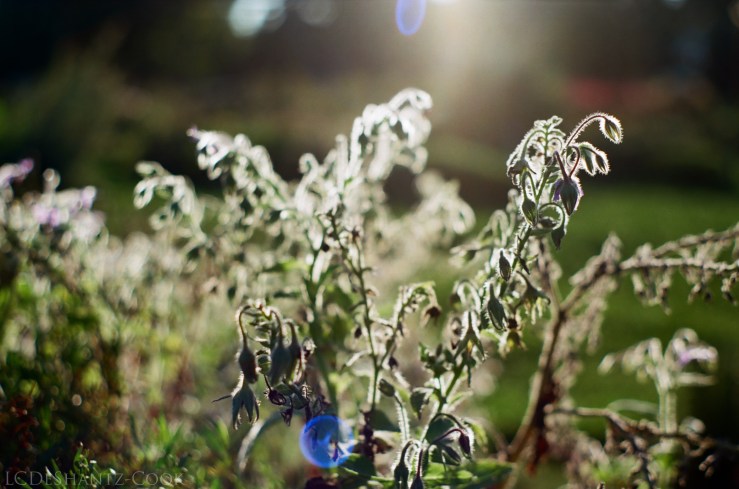
I just love a blue sun spotthe Brookwood again, this time on 35mm filmbecause there just are never enough goat pictures
Lake Michigan, dunegrass and clouds
Olympus Pen
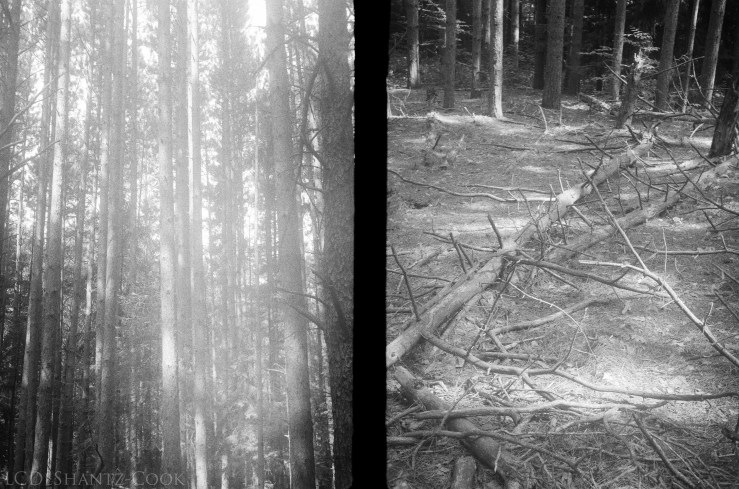
I also ran a roll of Ilford HP5 through my Olympus Pen. 400 speed film may simply have been the wrong choice, or I need more work on my settings with this all-manual camera, or probably a little of both, but the results were mostly too blown out. I’m still getting the hang of both black and white film and the Pen. I don’t care–I love it all–even the complete failures.
barefoot in Lake Michigan in late September
pine forest
Right now the colors are really getting intense across Michigan. The next few weeks are going to be busy for me, but I’m hoping to capture as much color as I can on both film and digital before it’s gone, and learn more about working with the cameras I have now in my arsenal.
I know it’s September, but one of the many things about film photography that interests me is that I don’t generally get my film developed immediately. Since I like to save money by getting several rolls developed at once, I have to wait until I have several rolls to develop. Which, depending on several factors, could take a month or so. So by the time I get film developed, seasons can change, new things are blooming (or drying up), etc. etc.
I tried a new lab for four rolls, one of which was shot on a Minolta X700 I recently acquired. The price and timing was right, but the color saturation seemed off, and everything appeared over-exposed and washed out. I may still use this lab as I can muck about with some of that stuff with the digitized image. But one of the other things I really like about film is the fact that you get what you get, and even that depends on who’s processing your stuff–and even the same lab can process each roll different than the next, at least in my experience.
So, I got what I got on these four rolls and I don’t mind that one bit.
These first four shots are from the newly acquired Minolta X700, which after shooting one roll I decided a) to keep, and b) to take in to repair, as it has a “sticky gasket” (that’s what the shop said–I just know the aperture ring sometimes worked and sometimes didn’t). Anyway, this was a cheapo drug store roll of Fuji 800 speed film, which I intended to use in New Orleans at night when I was there last May but didn’t.
And the Pentax K100, with Kodak Ultramax 400 speed film, produced these:
Barely noticeable through the brush
Tomatoes for sale in a little trailer, roadside
Apple orchard
Pear orchard
Wheat or rye, I never know
Power lines and turbines
Wild rose bush
My friend’s planter
Roadside, part of an abandoned compound
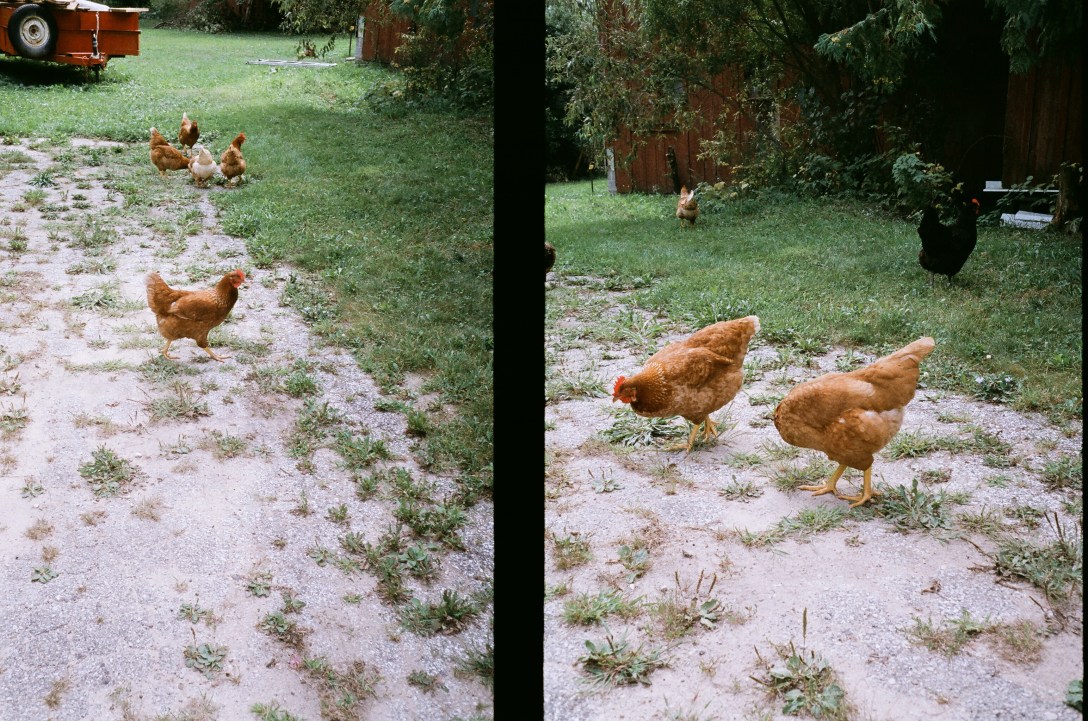
These next images were shot with Agfa Vista 200–a cheap film that I love for the half frame. I am crazy about the half frame format. Have I already mentioned that? I used my Olympus Pen EE3, which I’m so excited about because I got it for only $10.50. I don’t know why that makes me so happy, but it does. This is a fun point and shoot, just easier to use than the all-manual original Olympus Pen that I have (but I love that one, too).
A local farm stand, shop in barnThe farmers here have a small shop in their barn, antiques and such
Blueberry picking
Blueberry picking
Headless chicken (front, right)! Not really. No chickens were harmed in the making of this photograph.
Ann Arbor
Ann Arbor
Peach orchard
Harvesting about to happen
Harvesting about to happen
The EE3 has a fixed focus (obviously farther out than my wine glass and hand)
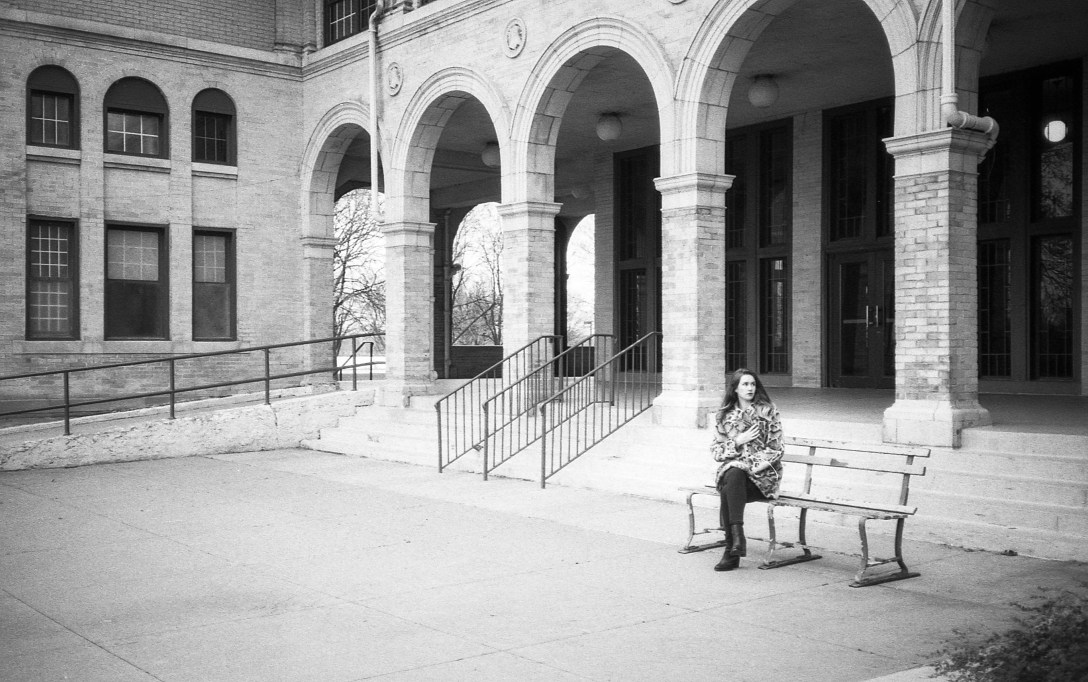
In the winter, I resurrected my mother’s old point and shoot camera (a Canon Sureshot circa 1980s). It came to me when my dad moved, I think, and I shoved it into a drawer or cupboard or closet and forgot about it.
A battery was left in it, which had corroded and the corrosion was leaking out. I painstakingly cleaned off the muck with vinegar and q-tips; carefully dried it out; gingerly put a new battery in. When that motor whirred to life I felt a jolt, a sudden excitement, like my mother had tiptoed back into the land of the living.
I put a roll of film in, which advanced as it should. And…
my daughter as model
…it worked. It has a ridiculously loud motor that made me laugh when I used it. And there is a unique joy that only a point and shoot can provide. No messing with settings, no choosing a focus, no missing anything that might suddenly come into frame.
In hindsight, I see a circular nature in this experiment. My mother’s old camera. My own old fake fur jacket, given to me by someone I once knew when I was the age my daughter was this winter, when I asked her to wear it so I could photograph her. My son, who developed the roll in his black and white film class a few months later, even though I didn’t have a way to see the images other than to hold the negatives up to the light and squint. And today, the delivery of a film scanner so that I can do more with the negatives piling up in my office because of this new film addiction.
Okay, maybe a sketchy circle. But it makes at least a little sense to me.
I’ll admit I’d been snobby about the idea of a point and shoot. But my mother’s camera was a breath of fresh air, a kick in the ass to remind me that fussy isn’t necessarily better, or more fun. And a way to reconnect with her, if only for the time it took to shoot a roll of film.
Detroit, Fisher Building in distance
Sadly the camera croaked when I tried to remove the film. The motor just flat out stopped, and no amount of cleaning the battery compartment or shoving newer batteries in there would coax it back to life. I took it to my local camera repair shop where I’ve had several vintage cameras worked on, and they said it wasn’t worth repairing.
















 I dream of sumac and milkweed (and other wild things)